Sources your panel can check
Citations come from scholarly records, so you can open and read what you cite.
Describe your study and get a structured RRL with in-text citations and a reference list. Use scholarly records, your own papers, or both.
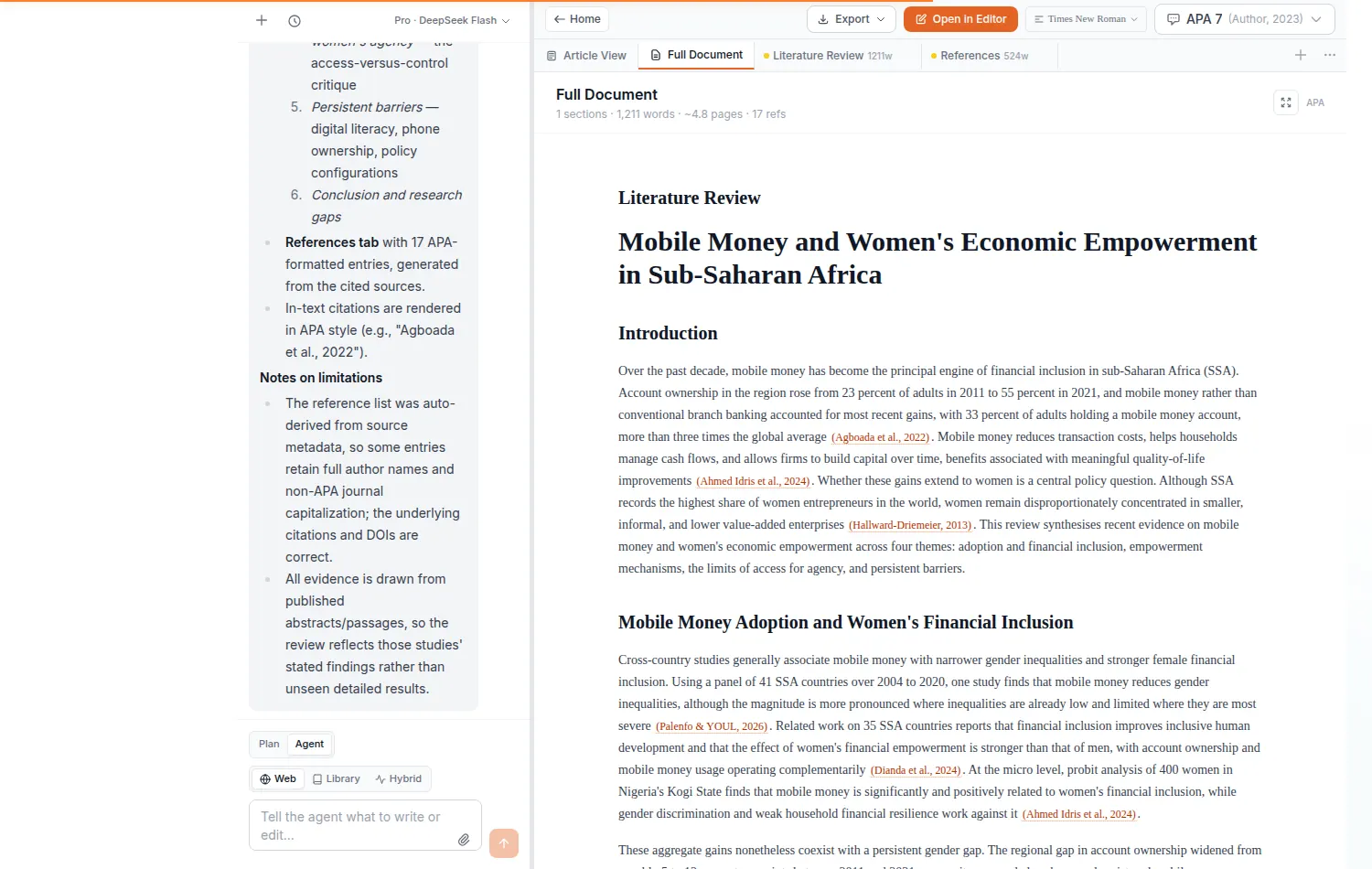
Citations come from scholarly records, so you can open and read what you cite.
Related studies are grouped by theme, then connected back to your own study.
Upload the articles you have collected and select them as sources.
Paste your title, research questions or your adviser's instructions.
Web, your Library, or both. Add local studies to your Library to include them.
Read it, check each citation and download it as Word or PDF.
Paste the finished reference list into the citation checker and see which ones match a scholarly record.

Assignments, dissertations and theses, with sources you can open and check before you hand anything in.
Manuscripts, grants and reviews, with checked references and reports you can share with co-authors.
They are the same idea. RRL is the name used in many Philippine schools and universities, usually for Chapter 2 of a thesis or research paper.
Upload local theses and articles to your Library and select them as sources. Local studies may not all appear in international records.
Treat it as a draft. Read every source you cite, write your synthesis in your own words, and follow your school's rules on AI.